

Challenge
Results

Written by


Sarah Caminiti
The Full Story
At first glance, your return policy might seem like a small detail — one that can largely stay hidden in a link in the footer of your website or a post-purchase email — but in reality, it carries significant weight in the overall customer experience.
Whether you sell physical goods or digital products, a well-executed return process builds loyalty, while a confusing or unnecessarily restrictive one drives negative reviews, poor CX, and lost customer lifetime value (CLTV).
Crafting the right policy requires balancing generosity and fairness with profitability. Not every company can support expensive return options, but clear, transparent communication still creates value by building trust, encouraging loyalty, and opening the door to referrals.
So, what policies keep your customers coming back, and which ones drive them away?
Is Your Return Policy Hurting Your CX?
Here are common return policy issues that might be causing friction, both for your customers and your CX agents:
- Policies that ban refunds or enforce short return windows
- Poor communication of terms, especially when hidden or written in confusing legalese
- No proration for partial use of services or products
- Complicated cancellation processes
- Forfeiting data or credits during returns
- High restocking fees or non-refundable shipping fees
- Generic return policies that don't account for different products, services, or customer needs
- No flexibility for agents to address unique situations
- Returns handled solely by AI, with no opportunity for escalation to a human
If your return approach isn’t working well, you might notice frequent escalations, agents repeatedly asking permission to make exceptions, or negative reviews specifically calling out your return policy.
Consider revising the policy itself or clarifying the language around it, ensuring it’s easy to find, and empowering your agents to make decisions based on context.
Return Policies to Consider
Policies that reduce friction and create loyalty prioritize clarity, transparency, ease, and flexibility. Look at these refund policy examples to see how customer-centric approaches work in practice:
Prorated Refunds
Some SaaS companies take an all-or-nothing approach, locking customers into contracts they no longer want. Prorated refunds allow users to cancel anytime and only pay for what they have used. For example, some SaaS companies offer prorated refunds on account balances if a paid subscription is canceled. This is a fair alternative to denying refunds, and reduces chargebacks.
The same principle can apply to physical products, like subscription boxes. For example, if some items in a customer’s meal kit subscription box arrived spoiled, offering a prorated refund for that portion of the box builds trust by ensuring customers only pay for what they can actually use.
Free Shipping on Returns
Allowing customers to return an item without paying for return shipping improves customer satisfaction. Every online store return policy should aim to minimize out-of-pocket costs for the customer, making the process as painless as possible.
Even if free return shipping for all orders isn’t feasible, a shared-cost model — like covering most of the cost while the customer pays a low flat return fee, or offering free returns for exchanges or store credit — can balance affordability with customer satisfaction.
No-Questions-Asked Guarantee
If a customer isn’t happy with an item, let them send it back, no interrogation or hoops. Removing strict conditions around returns shows you stand behind your products and lowers perceived risk — which, in turn, encourages customers to buy more often and with more confidence.
One-Click Cancellation
For SaaS, make cancellations and refunds easy to process. No-hassle cancellations help preserve relationships with customers who may return later. They also let unhappy users leave quietly, preventing negative reviews and PR damage around inflexible contracts.
“Give It Away” Return
Reverse logistics is one of the most expensive aspects of returns. For some companies, offering a refund while telling the customer to gift, donate, or keep the item makes financial sense, especially for low-cost items or international shipments.
Repair and Return
Sometimes customers just want an item fixed, not refunded. Allowing users to get something repaired and sent back improves CLTV and proves your commitment to product quality.
This approach is especially effective for big-ticket items like laptops, tablets, high-end cameras, appliances, and tools. Even if the customer pays for shipping, a smooth repair-and-return option can feel like a fair trade-off for keeping a product they already like.
Convenient Drop-Offs
Making returns easy by allowing users to bring products to any location or partner kiosk eases the process. This works well if you have physical locations, utilize locker systems, or can partner with another retailer to serve as a drop-off location. It reduces the work required by customers, especially if you give them the option to bring the item in without any packaging or printing.
Generous Return Time Periods
While many companies offer 14 or 30 days to try a product, a longer timespan is highly appreciated. Target offers a 90-day return window for most items and a full year for its own brands. IKEA gives customers 365 days to change their minds.
A longer return window gives customers more time to live with the product and feel confident in their purchase, which reduces purchase anxiety and, in turn, increases both conversion rates and long-term loyalty.
How to Reduce Customer Returns
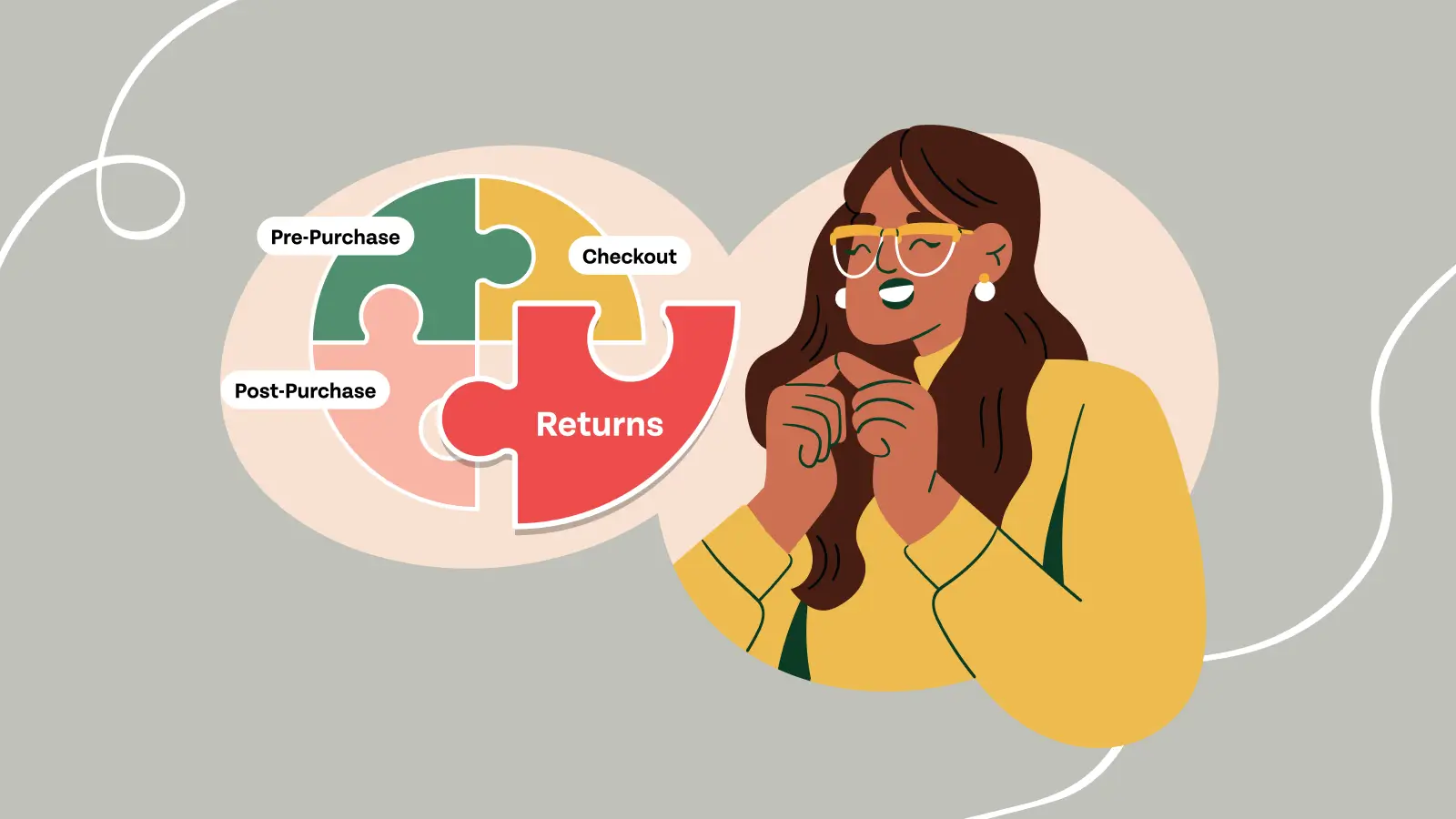
Take a full-lifecycle approach to CX, even when it comes to returns. By addressing potential issues before purchase, you can reduce return volume while building customer confidence.
Rich Product Details
Accurate descriptions, high-quality photos, and videos give shoppers a clear understanding of what they’re buying. Setting expectations up front reduces the likelihood of “not as described” returns.
Size Guides and Fit Tools
Clear size charts, fit finders, and comparison tools take the guesswork out of sizing, helping customers feel confident in their choices. This not only encourages purchases but also lowers the chances of returns due to fit issues.
Social Proof and Q&A
Customer reviews, star ratings, and searchable Q&A sections provide customers with insight into how a product looks, feels, and performs. For apparel, allowing purchasers to rate the fit of items (e.g., “runs small”) and showcasing that feedback directly on product pages empowers shoppers to make more informed decisions, reducing the likelihood of returns.
Get the Most Out of Returns
Refunds and returns are an inevitable part of doing business, but they don’t have to be a sunk cost. Here’s how to use returns as an opportunity:
Collect Actionable Feedback (Within Reason)
Ask customers why they’re returning products or canceling services to uncover issues with sizing, expectations, onboarding, or product quality. Pair this feedback with order data to spot trends and make improvements by refining products and updating content like FAQs, knowledge bases, and size guides.
At the same time, keep in mind that every extra question you ask adds a little bit more friction to the return process. Keep it as low-lift as possible — a short dropdown with a few clear options and no required free-text explanation. Balancing your need for data with their desire for fast, hassle-free returns is key to maintaining trust and satisfaction.
Bring Customers Back
Offer an exchange if the product simply wasn't a good fit. You can also offer a discount on the next purchase, so a return isn't the end of the customer relationship — but make sure this feels authentic, not just like an aggressive upsell.
Strengthen Loyalty and Brand Perception
Returns are a critical CX touchpoint. Fast processing, clear communication, and a consistent brand voice can turn a potentially negative experience into a positive one. A smooth return process makes repeat purchases more likely, and improves brand perception.
Don’t Let Returns Ruin Your CX
Returns may seem like a challenge, but they’re also a powerful opportunity to strengthen your customer relationships, improve your offerings, and build long-term loyalty.
If returns currently feel like a pain point rather than an opportunity, they could be harming your CX. The first step is identifying friction — and SupportNinja can help you audit and improve your full CX lifecycle, end to end.
We provide scalable support and technology to help create a seamless customer from first click to post-purchase, including returns. Let’s talk.
Growth can be a great problem to have
As long as you have the right team.
.svg)