

Challenge
Results

Written by


Sarah Caminiti
The Full Story
Every CX and operations leader we talk to is asking the same question: how do we get AI to actually work, at volume, with measurable outcomes?
Technology rarely determines whether AI implementation succeeds or fails. Projects stall when lack of ownership, poor data, resistance to change, and unclear goals block progress.
When your people, data, and processes align, you build a strong foundation for AI to deliver results.
Let’s explore five dimensions that determine whether you’re is truly ready to move from AI curiosity to AI execution.
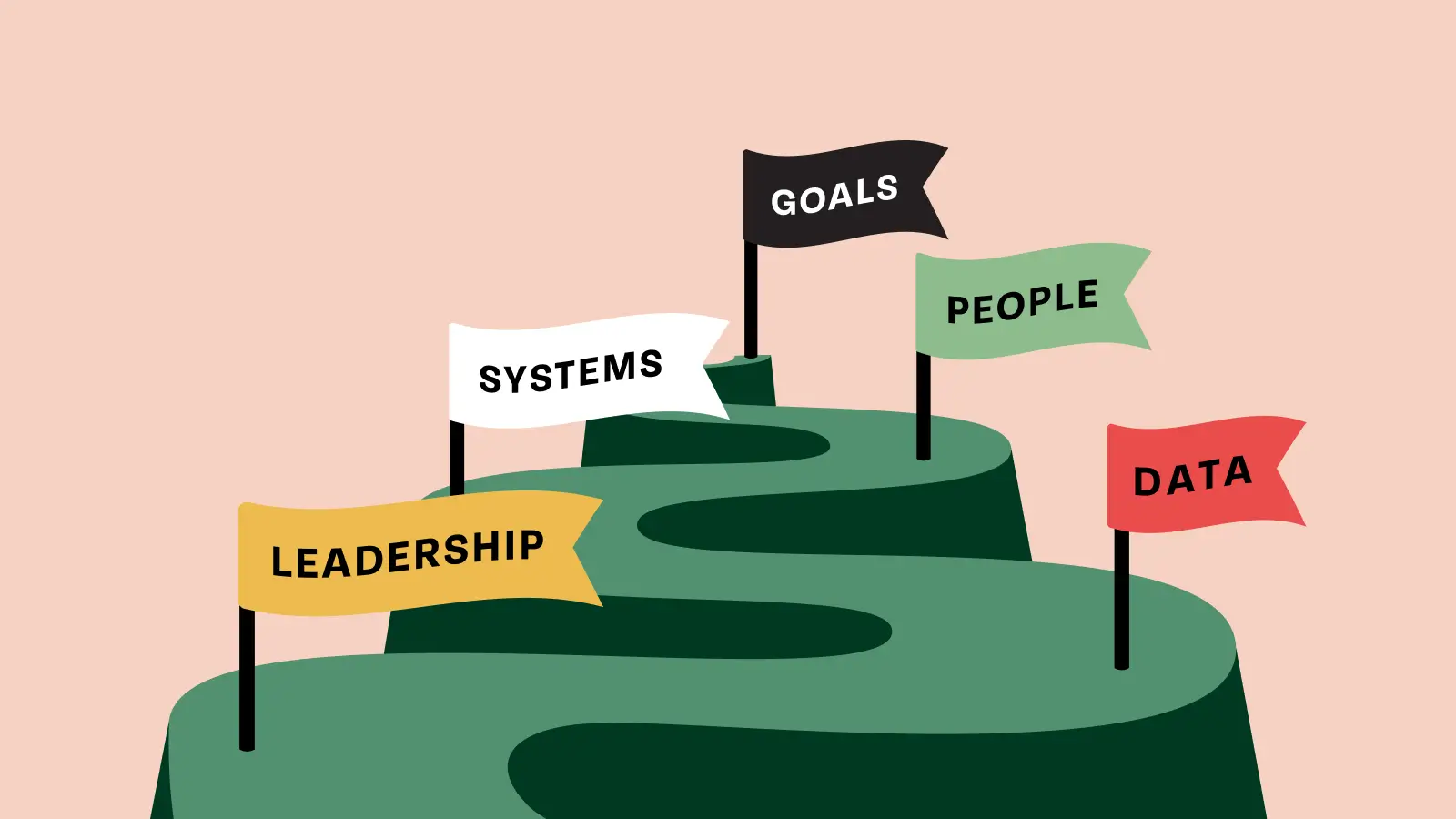
The 5 Dimensions of AI Readiness
AI only works when you build strength in five core areas. Weakness in any one of them creates friction that no AI vendor can solve.
1. Strategy & Leadership Alignment
Strong AI results start with aligned,accountable leadership. When there’s no single executive owner, no vision tied to business results, and no cross‑team backing, AI efforts tend to drift and lose momentum.
2. Data Infrastructure & Quality
AI succeeds when your data is clean, unified, and reliable. Scattered, incomplete, or inconsistent data leads to weak insights and wasted spend, no matter how strong the AI tools are.
3. Technology Stack & Integration Readiness
Your tech stack has to actually work together. Legacy, siloed, or poorly integrated systems slow everything down and block AI from making a visible impact on customer experience.
4. People, Process & Change Readiness
This is the hardest dimension and the most frequently skipped. If teams aren’t adequately trained on how to use AI tools, don’t see the benefits of those tools, or feel threatened by change, adoption stalls and AI can’t improve CX.
5. Measurement & Outcome Clarity
Without clear KPIs and a shared definition of success, it’s almost impossible to prove AI’s value. Your organization will chase activity instead of outcomes and struggle to justify further investment.
Assessing AI Readiness: Red Flags to Look Out For
Jumping into AI too soon wastes money, stalls projects, and frustrates your team, so it pays to assess your readiness before you invest in implementation projects.
Even if you haven’t completed a formal assessment yet, you can still spot readiness gaps. You’ll notice warning signs of AI gaps in the phrases people use and the attitudes that come across everyday discussions.
If you’re hearing these sentiments come up, your organization likely isn’t ready to move forward with AI.
In Leadership Conversations
“We're exploring AI as an organization, but no one is really leading our AI efforts.”
Without a clear owner or budget, progress stalls. If every department has their own approach to AI implementation, progress will stay fragmented and you won’t see results at an organizational level. Committees can be useful in some situations, but when no single stakeholder has the final say, it’s hard to move from ideas to implementation.
“AI will allow us to cut costs by replacing our agents.”
Treating AI as just a quick way to cut headcount signals a lack of readiness. Without a plan for how AI and people will work together to improve CX, or clear metrics beyond cost savings, you risk eroding trust with employees and customers alike, and key metrics like CSAT will likely decline. AI shouldn’t be framed as a replacement for humans — instead, position it as a tool that helps you deliver better CX outcomes with a smarter mix of people, processes, and technology.
In Data Conversations
“Our data lives in multiple systems that don't talk to each other.”
You can’t implement effective AI on top of fragmented data systems. When data is scattered between your help desk, CRM, billing platform, order management system, and analytics platform, you end up with siloed information that can’t fuel seamless CX or streamline internal workflows. If your teams have to manually piece together data before they can make decisions or take action, AI projects will stall out before they produce results.
“We have CSAT scores, but they're six weeks old.”
Real-time data access is foundational to AI-enabled CX. If your metrics lag by weeks, your reports don’t reflect what’s actually happening. Key trends go unnoticed and AI models end up optimizing for outdated data, leaving you constantly reacting to issues long after customers have already experienced them. This lag makes it tougher to identify new issues, experiment with solutions, or demonstrate meaningful results.
In Technology Conversations
“We're still on [legacy platform] but we're evaluating.”
Modern AI platforms require connected, up-to-date systems — like a CRM, an ERP, or the integration layer that everything depends on — and sticking with a legacy system will impede that. If your team has spent months assessing new tech stack possibilities but never pulls the trigger, that's a problem for AI readiness. The source of the roadblock could be budget limits, unclear ownership, or fear of change, but whatever’s blocking your progress here will block your progress with AI, too.
In CX Agent Conversations
“Nobody told us about the AI project or asked for our input.”
When CX agents aren’t informed or consulted about an AI initiative, it’s coming as a top‑down technology rollout instead of a transformation of how work actually gets done. That makes adoption harder: agents are more likely to resist, not find value in the tools, and work around them, undermining any potential efficiencies. In turn, leadership sees little measurable improvement, and the AI initiative is written off.
Get AI-Ready Before You Launch an Initiative
Most organizations overestimate their AI readiness. AI will either amplify the operational foundation you've already built or expose the weaknesses you've been working around.
Understanding both your strengths and your gaps across the 5 dimensions of AI readiness is the first step toward scalable success. The companies that achieve measurable results with their AI initiatives do this diagnostic work first, then invest in the specific systems, data, and processes that make it possible for AI to actually deliver value.
Ready to get a clear view of your AI readiness? Let’s talk.
Growth can be a great problem to have
As long as you have the right team.
.svg)